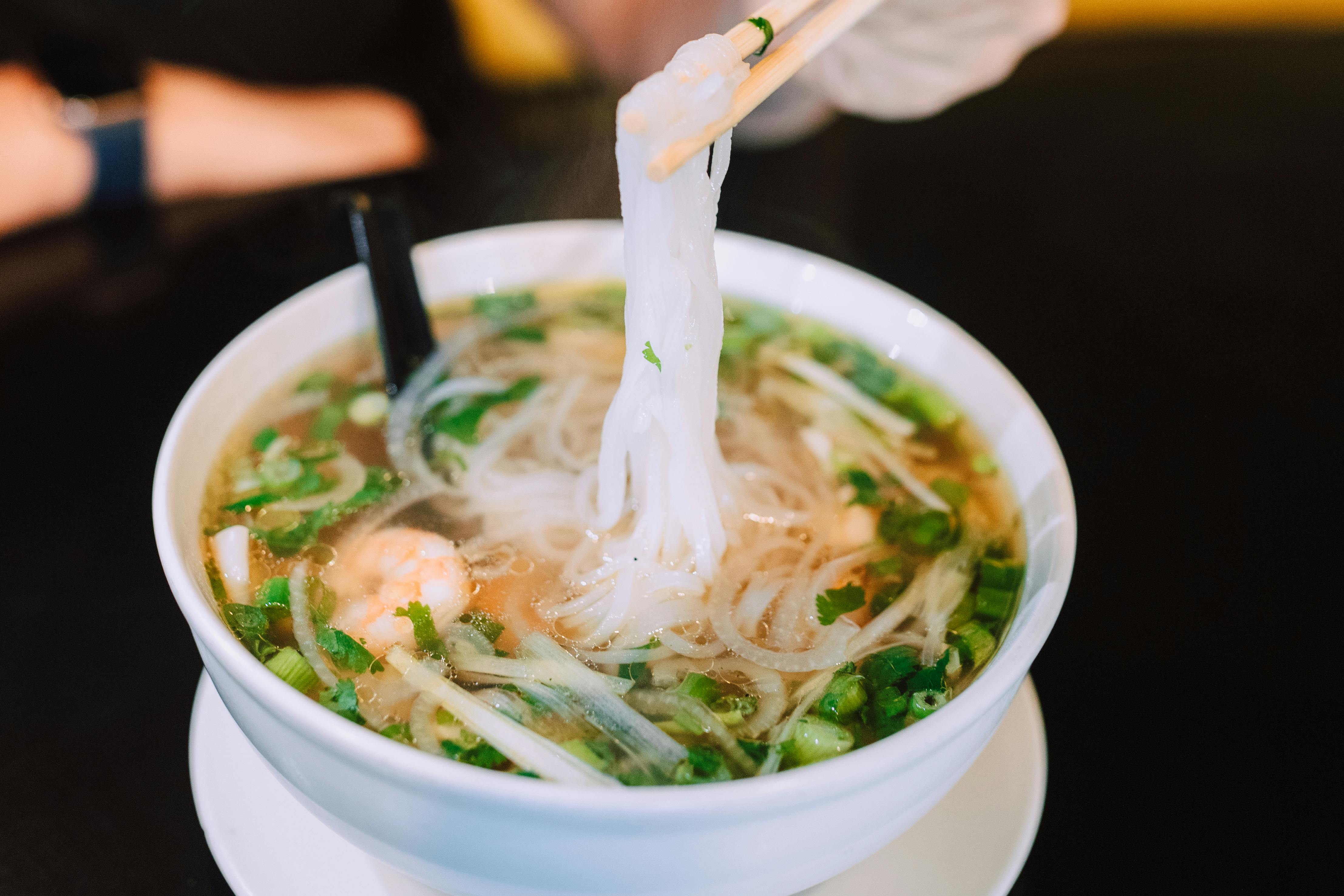
Pho in Hanoi vs Pho in Ho Chi Minh: They're Actually Completely Different
The first time I went to Vietnam, a friend told me, "Try pho in Hanoi. It's nothing like the pho you've had elsewhere."
I rolled my eyes inside. Pho is pho, right?
Then I actually tried it. And I was floored.
The pho I'd been eating in Western countries was mild, sweet, and light on spices. The Hanoi pho was salty, deep, and uncompromisingly meaty.
Turns out the pho most of the West knows is a Southern-style pho that traveled to America with refugees and got remixed.
Vietnam is a long country, and the North (Hanoi), Center (Hue, Da Nang), and South (Ho Chi Minh) have completely different cuisines.
Going in thinking "Vietnamese food = pho" means you won't even see half of what Vietnam offers.
So in this guide, I'm covering what first-timers need to know about North vs South Vietnamese food, how the same dish differs by region, what to eat where, and how to order without regrets.
Once you understand this, you'll read Vietnamese menus completely differently.
📑 Table of Contents
- Why Vietnamese Food Differs by Region
- Characteristics of Northern (Hanoi) Cuisine
- Characteristics of Southern (Ho Chi Minh) Cuisine
- The Same Pho, Two Different Dishes
- Regional Dish Comparison
- Spices and Sauces by Region
- City-by-City Guide for First-Timers
- Western Pho vs Real Vietnamese Pho
- Vietnamese Food Ordering Tips
- Pre-Trip Vietnamese Food Checklist
🇻🇳 Why Vietnamese Food Differs by Region
It's a combination of geography, history, and climate.
| Factor | North (Hanoi) | South (Ho Chi Minh) |
|---|---|---|
| Climate | Four seasons, cold winter | Hot and humid year-round |
| Geography | Borders China | Mekong Delta, near Cambodia |
| Historical influence | Cantonese (Chinese) cuisine | French colonial + Cambodian |
| Crops | Rice, limited vegetables | Abundant rice, tropical fruits, herbs |
| Ingredients | Soy sauce, simple seasoning | Coconut, sugar, lime, herbs |
💡 Climate Shapes the Cuisine
The North has winter, so warm broth dishes dominate, with food that's savory and salty.
The South is hot year-round, so cold noodles, fresh herbs, and tangy lime are everywhere.
💡 Historical Influence
- North: Cantonese Chinese influence → soy sauce, lots of stir-fries
- South: French colonial + Cambodian proximity → bread, coffee, lots of sugar, sweeter dishes
💡 Same Vietnam, Different Palates
It's like the difference between New York pizza and Chicago deep dish, or Northern barbecue and Southern barbecue.
Same country, different food culture.
I went to Vietnam without knowing any of this. The pho in Hanoi vs the pho in Ho Chi Minh was so different I genuinely thought I was eating different dishes. They share the name "Phở" but feel like cousins, not twins.
🥢 Characteristics of Northern (Hanoi) Cuisine
Northern food in one phrase: "Salty, clean, traditionalist."
🇻🇳 Northern Food Characteristics
- Salty as the base flavor (lots of soy sauce, fish sauce)
- Light on spices (lets the ingredients speak)
- Clear, deep broths (long-simmered bones)
- Modest herb use (just coriander)
- Soy sauce is common (stir-fries, broths)
- Cold dishes are rare
🍜 Northern Signature Dishes
1️⃣ Phở bò (Beef Pho)
- Beef noodle soup
- Salty, rich bone broth
- Modest ginger, cinnamon, star anise
- Simple toppings: onion, scallion
2️⃣ Bún chả
- Hanoi's signature dish
- Grilled pork over charcoal + thin rice noodles + sweet-sour fish sauce
- The dish Obama famously ate in Hanoi
- Rarely found outside the North
3️⃣ Bún bò Nam Bộ
- Tossed rice noodles
- Tangy and savory, very accessible to most palates
4️⃣ Chả cá
- Hanoi specialty fish dish
- Turmeric and dill-marinated white fish
- Served with noodles
5️⃣ Quẩy
- Fried dough strips for dunking in pho broth
- Like tempura in udon
- Has roots in post-war food scarcity
💡 Northern Dining Vibe
- Modest and clean
- Restrained seasoning
- Light on spice
- Surprisingly accessible to Western palates
The first time I tried bún chả in Hanoi, it tasted oddly familiar — like cold noodles with grilled meat on the side.
Not what I expected from "Vietnamese food," but instantly addictive.
🌴 Characteristics of Southern (Ho Chi Minh) Cuisine
Southern food in one phrase: "Sweet, flashy, tropical."
🇻🇳 Southern Food Characteristics
- Sweet as the base flavor (lots of sugar, coconut)
- Abundant spices and herbs (lime, mint, basil)
- Slightly sweet broths (a touch of sugar)
- Loaded with fresh vegetables
- Coconut milk in many dishes
- Lots of cold, tangy options
🍜 Southern Signature Dishes
1️⃣ Phở - Southern style
- Same noodle soup, but sweeter broth
- Side plate of bean sprouts, lime, basil, coriander
- Add hoisin and sriracha at the table
- Visually loaded
2️⃣ Bánh mì
- Vietnamese sandwich (French colonial legacy)
- Crispy baguette + pork, pâté, carrot, coriander
- About $1-3 USD, incredible value
- Everywhere on Ho Chi Minh streets
3️⃣ Bún thịt nướng
- Southern version of bún chả
- Grilled pork + cold rice noodles + herbs
- Slightly sweeter and tangier than bún chả
4️⃣ Hủ tiếu
- Cambodian origin
- Glass noodle-like texture
- Pork bone and shrimp broth
5️⃣ Bánh xèo
- Vietnamese savory crepe
- Shrimp, pork, bean sprouts
- Wrapped in rice paper
- Dipped in sweet-tangy sauce
6️⃣ Cơm tấm
- Ho Chi Minh's lunchtime classic
- Broken rice + char-grilled pork
- Tender and filling
- Major lunch staple
💡 Southern Dining Vibe
- Flashy and abundant
- Add your own herbs and sauces
- Sweeter overall
- Some dishes feel similar to Thai food
The first time I had bánh mì in Ho Chi Minh, "This is $1.50?!" A crispy baguette, thick pork slices, packed vegetables. Same thing at home would be $10 easy.
🍜 The Same Pho, Two Different Dishes
This is the most confusing part for first-timers. Same "phở," completely different dish by region.
🥢 Northern Pho vs Southern Pho
| Aspect | Northern (Hanoi) | Southern (Ho Chi Minh) |
|---|---|---|
| Broth flavor | Salty, clean | Sweet, rich |
| Spices | Modest (ginger, cinnamon, anise) | Abundant (varied herbs) |
| Meat | Mostly cooked | Raw + cooked combo |
| Toppings | Onion, scallion only | Bean sprouts, basil, mint, lime |
| Sauces | Almost none | Hoisin, sriracha enthusiastically |
| Vibe | Traditional, clean | Flashy, freestyle |
💡 The Soul of Northern Pho
- Taste the broth as it is
- Almost no seasoning added
- Rich bone broth + a hint of spice
- One spoonful and you get the whole picture
💡 The Soul of Southern Pho
- Build your own flavor
- Side plate of herbs, lime, sauces
- Add to taste
- Halfway through, add more
💡 Where Does Western Pho Fit?
Western pho is the Southern style that crossed to America with refugees and got further softened.
- Spices toned down
- Sweetness added
- Fewer herbs
- A "Westernized pho"
So when Western fans of pho go to Hanoi, they get shocked.
"This isn't the pho I know!"
🍽️ Regional Dish Comparison
| Dish Type | Northern (Hanoi) | Southern (Ho Chi Minh) |
|---|---|---|
| Pho | Phở - clean and salty | Phở + Hủ Tiếu - sweet |
| Grilled noodles | Bún chả (warm) | Bún thịt nướng (cold) |
| Sandwich | Bánh mì (simple) | Bánh mì (loaded) |
| Crepes | Bánh cuốn (thin) | Bánh xèo (large, flashy) |
| Rice dish | Various (simple) | Cơm tấm (classic) |
| Salad | Gỏi Nam Bộ | Gỏi cuốn (spring rolls) |
| Dessert | Chè (simple) | Chè (coconut, tropical fruit) |
| Drinks | Tea, egg coffee | Condensed milk coffee, juice, coconut |
🥇 5 Must-Eats in the North
- Phở bò (beef pho) - The original
- Bún chả - Only in Hanoi
- Chả cá - Turmeric fish
- Bánh cuốn - Vietnamese steamed rolls
- Egg coffee (Cà phê trứng) - Hanoi origin
🥇 5 Must-Eats in the South
- Bánh mì - Best $1.50 you'll spend
- Cơm tấm - Broken rice
- Phở gà (chicken pho) - Southern style
- Bánh xèo - Vietnamese crepe
- Condensed milk coffee - Saigon style
🌿 Spices and Sauces by Region
The magic of Vietnamese food is the freedom to add your own herbs and sauces.
🇻🇳 4 Essential Vietnamese Sauces
1️⃣ Nước mắm
- Fish sauce
- The foundation of Vietnamese flavor
- Salty + umami
2️⃣ Nước chấm
- Fish sauce + lime + sugar + garlic
- Dipping sauce for bún chả, bánh xèo
- Sweet-tangy
3️⃣ Hoisin sauce
- Sweet, salty, brown sauce
- Common with Southern pho
- Almost unused in the North
4️⃣ Sriracha chili sauce
- Spicy red sauce
- Heavy in Southern style
- Northern purists barely use it
🌿 5 Vietnamese Herbs
| Herb | Flavor | Regional Use |
|---|---|---|
| Coriander (Ngò rí) | Strong herbaceous | Both North and South |
| Thai basil (Húng quế) | Sweet aroma | Heavy in South |
| Mint (Bạc hà) | Cool, refreshing | Heavy in South |
| Vietnamese mint (Rau răm) | Spicy, cool | Heavy in North |
| Culantro (Ngò gai) | Strong coriander | Heavy in South |
💡 How to Use Herbs
- North: Already seasoned in the kitchen → don't add more
- South: Plate of herbs and sauces on the side → build your own
💡 If You Don't Like Coriander
- Say "Không cho rau thơm" (Kong chuh rau thuhm) = "No herbs, please"
- Or "No coriander, please"
- Vietnamese restaurants are very used to this request
I couldn't eat coriander at first, so I memorized "Không cho rau thơm" and showed photos.
By day 3, I actually missed coriander when it was missing.
🗺️ City-by-City Guide for First-Timers
Where to go, what to eat.
🏙️ Hanoi (North)
City Vibe
- Home of traditional Vietnamese cuisine
- Has all four seasons, great in fall/winter
- Hoan Kiem Lake, Old Quarter 36 streets, vibrant street food
Must-Try
- Bún chả (street stalls, traditional restaurants)
- Phở bò (Phở 10 Lý Quốc Sư, etc.)
- Egg coffee (Café Giảng original)
- Bánh cuốn (Vietnamese steamed rolls)
Budget
- Street meal: $1-3 USD
- Restaurant meal: $5-15 USD
- Cafe: $2-5 USD
🏖️ Da Nang / Hoi An (Center)
City Vibe
- Spicy food culture (Central trademark)
- Beach + foodie destination
- My Khe Beach, Hoi An Night Market
Must-Try
- Bún bò Huế (spicy beef noodle)
- Mì Quảng (Da Nang signature)
- Cao lầu (Hoi An signature)
- Bánh mì Phượng (legendary banh mi in Hoi An)
Budget
- Street meal: $1.50-4 USD
- Restaurant meal: $7-20 USD
🌴 Ho Chi Minh (South)
City Vibe
- Glamorous big city
- Many foreign influences
- Ben Thanh Market, Bui Vien Street
Must-Try
- Bánh mì (Bánh Mì Huỳnh Hoa, etc.)
- Cơm tấm (lunch)
- Phở (Southern style)
- Coconut coffee
Budget
- Street meal: $1.50-3.50 USD
- Restaurant meal: $7-25 USD
💡 If You Only Have Time for One City
- First Vietnam trip + short schedule: Da Nang/Hoi An (variety)
- Food essence + culture: Hanoi
- Energy + tropical vibe: Ho Chi Minh
🌍 Western Pho vs Real Vietnamese Pho
This part is the real shock.
🍜 What Western Pho Actually Is
- Came West with Vietnamese refugees
- Not directly from Vietnam, but the American adaptation
- Further softened for Western palates over decades
- Lighter spice, milder broth
🥢 Western Pho vs Vietnamese Pho
| Aspect | Western Pho | Vietnamese Original |
|---|---|---|
| Broth | Mild sweetness | Salty (N) or sweet rich (S) |
| Spices | Barely there | Moderate to abundant |
| Herbs | Bean sprouts maybe | Variety |
| Meat | Thin slices of beef | Generous, various cuts |
| Atmosphere | Quiet restaurant | Bustling street stalls |
| Price | $10-15 USD | $1.50-5 USD |
💡 Common First-Timer Shocks
🤔 "Why is it so salty?" (Hanoi)
→ Northern traditional. No extra seasoning added.
🤔 "Why is it so sweet?" (Ho Chi Minh)
→ Southern style. The sweetness is built in.
🤔 "Why so many spices?"
→ Original Vietnamese has rich spicing. Western pho is the toned-down version.
🤔 "Why is it so cheap?"
→ Vietnamese cost of living is lower. Western pho is the marked-up version.
💡 Don't Be Disappointed
Western pho and Vietnamese pho are basically two different dishes that share a name.
"Same menu, different dish" — treat them that way, and enjoy Vietnam's version for what it is.
I doubted "is this real pho?" at first too, but by day 3 I genuinely understood what real pho is.
💡 Vietnamese Food Ordering Tips
Practical tips for first-timers.
🗣️ Basic Phrases
- "Cho tôi..." (Cho toy) = "I'd like..."
- "Ngon!" (Ngohn) = "Delicious!"
- "Không cay" (Kong kai) = "Not spicy"
- "Không cho rau thơm" (Kong chuh rau thuhm) = "No herbs, please"
- "Tính tiền" (Teen tien) = "Bill, please"
🍽️ Street Stalls vs Restaurants
| Aspect | Street Stalls | Restaurants |
|---|---|---|
| Price | $1-3.50 USD | $5-25 USD |
| Vibe | Bustling, real Vietnam | Clean, comfortable |
| Hygiene | Crowded = generally OK | Generally safe |
| Language | Vietnamese only | English menus often |
| Recommended | Bánh mì, Phở, Bún chả | Cơm tấm, Bánh xèo, courses |
💡 Safe Street Eating
- Pick spots with locals
- High turnover ingredients
- Heat-treated foods (pho, bún chả)
- Be careful with raw vegetables (only at clean-looking spots)
- Avoid ice in drinks except at hotels/restaurants
💡 Payment Tips
- Cash is standard, small denominations (50k, 100k VND)
- Cards work at restaurants and upscale cafes
- Light tipping culture (rounding up is fine)
- Street stalls: point at photos works great
💡 Vietnamese Dining Culture
- Eat fast, leave fast (especially street stalls)
- No need to order for the whole group
- People don't share one big plate
- Each person orders their own
- Use chopsticks + spoon together
📋 Pre-Trip Vietnamese Food Checklist
✅ Confirm which city (North, Center, South)
✅ Learn 5 signature dishes of your city
✅ Memorize "Không cho rau thơm" if you don't like coriander
✅ Memorize "Không cay" if you can't do spice
✅ Exchange VND (small denominations)
✅ Save target restaurants on Google Maps
✅ Build a Vietnamese food photo album (for pointing)
✅ Hand sanitizer for street eating
✅ Water bottle (use hotel filter water)
✅ Check for spice allergies before going
📚 Official Resources
For Vietnam trip planning, check these official sources.
The Vietnam Tourism site has regional food, attractions, and festival info, while the State Department covers safety and consular information. Worth a look before flying.
🥢 Standing in Front of Your First Bowl
Vietnamese food is a completely different world depending on which region you're in.
- North (Hanoi) → Salty, clean, traditionalist depth
- South (Ho Chi Minh) → Sweet, flashy, freedom of herbs and sauces
- Center (Da Nang, Hue) → Spicy, salty, royal cuisine influence
- Universal → Street food is real, prices are wonderfully fair
I used to think "pho = Vietnam."
But after bún chả in the North, bánh mì in the South, and mì Quảng in the Center, I understood how rich Vietnam's food culture really is.
Western pho was just the entry point.
Before your next Vietnam trip, learn the signature dish of whichever city you're heading to.
Same Vietnam, but the trip changes based on what you eat where.
Vietnam really starts with your first bowl.