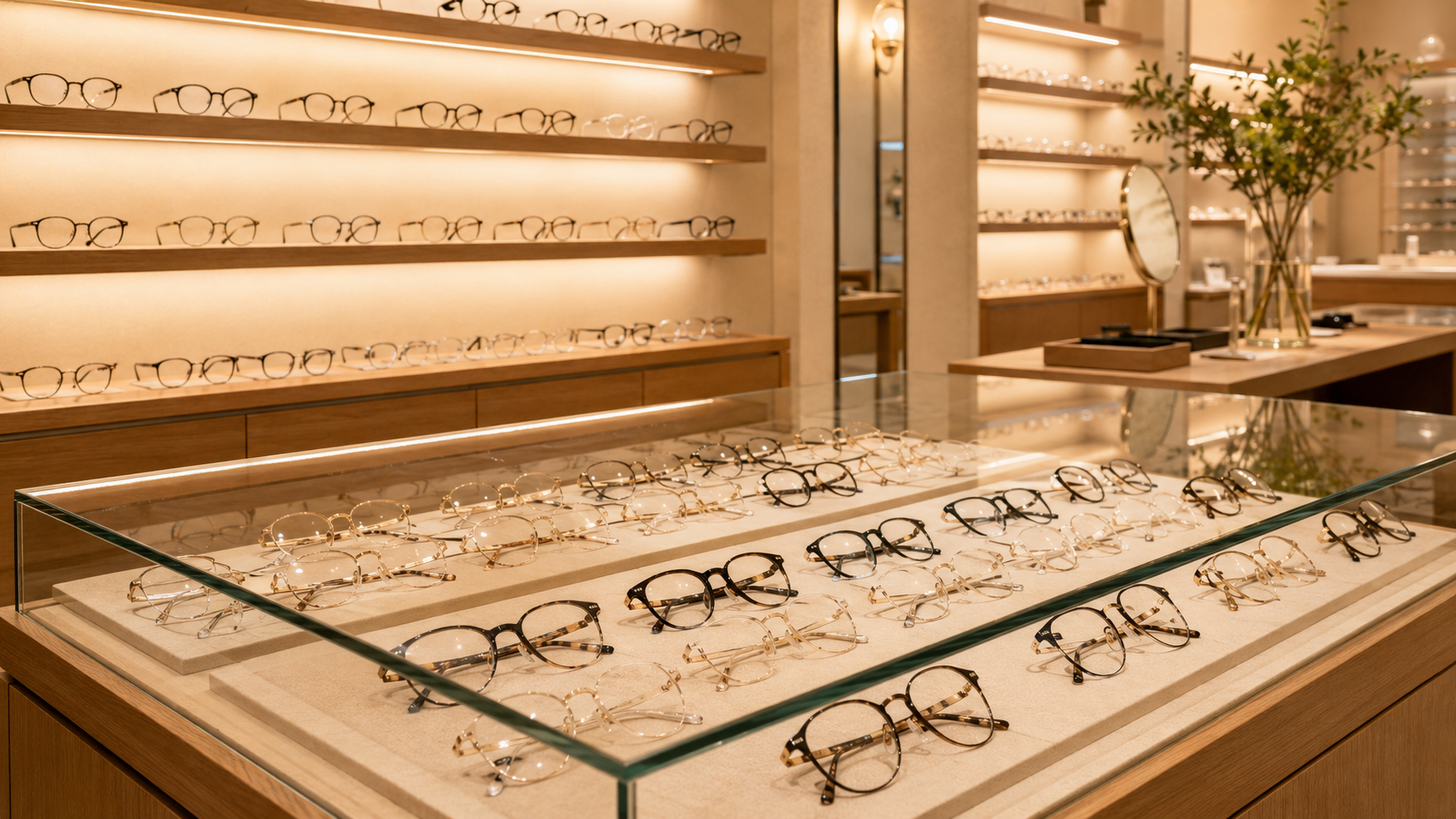
Short answer: expect $40–100 USD for a complete pair — frames, prescription lenses, free eye exam, and same-day pickup included. The same setup in the US easily runs $300–500 once you add the exam fee, and takes one to three weeks.
This guide breaks down exactly where that money goes, what's free, what costs extra, and how to avoid the few upsells that can quietly double your bill.
🗺 Planning a Korea trip? Build your free route in Piglemaps →
The Full Price Breakdown
Korean optical shops price frames and lenses separately. Here's what each piece typically costs:
| Item | Typical price (KRW) | In USD |
|---|---|---|
| Eye exam | Free | $0 |
| House-brand frames | ₩20,000–50,000 | ~$15–38 |
| Korean designer frames | ₩50,000–150,000 | ~$38–115 |
| Basic single-vision lenses | ₩20,000–40,000 | ~$15–30 |
| High-index lenses (strong prescriptions) | ₩40,000–100,000 | ~$30–77 |
| Blue light coating | +₩10,000–30,000 | ~$8–23 |
| Photochromic (transition) lenses | +₩50,000–100,000 | ~$38–77 |
| Fitting & adjustments | Free | $0 |
So a realistic basic pair — house frames + standard lenses — lands around ₩50,000–80,000 ($38–60). Pick a designer frame and upgraded lenses and you're looking at ₩100,000–200,000 ($77–155) — still well under a basic US pair.
Prices vary by shop and neighborhood; treat these as typical ranges, not quotes.
Korea vs. the US: Same Glasses, Different Bill
| 🇺🇸 United States | 🇰🇷 Korea | |
|---|---|---|
| Eye exam | $50–250, billed separately | Free, in-store |
| Basic complete pair | $200–400 | $40–80 |
| Designer frames + good lenses | $400–700+ | $100–200 |
| Wait time | 1–3 weeks | Same day (single vision) |
The gap is big enough that for many travelers, the glasses alone offset a chunk of the flight cost — especially if you need two pairs or prescription sunglasses.
🗺 Piglemaps partners with optical shops, so you can get your glasses made quickly and with confidence — browse optical shops →
Why Is It So Cheap?
It's not lower quality — it's a different system:
- No medical gatekeeping. Licensed opticians do the refraction exam in-store, free, instead of a separately billed optometrist visit.
- On-site lens labs. Most shops cut standard lenses in the back room, cutting out the off-site lab markup and the shipping wait.
- Fierce competition. Optical shops cluster by the dozen in shopping districts, which keeps prices honest.
- Domestic lens manufacturing. Korea produces lenses at scale, so the base materials cost less than imported equivalents.
Three Realistic Budgets
The $40 pair — house frames, standard single-vision lenses. Perfectly solid daily glasses; this is what many locals wear.
The $80–120 pair — Korean designer frames, thinner high-index lenses, maybe a blue light coating. The sweet spot for most travelers.
The $150–250 pair — premium frames plus every lens upgrade. Still roughly half of what the equivalent costs in the US.
How to Keep the Price Honest
- Ask for the total before they cut. Frame price tags usually show the frame only — confirm the frame-plus-lens total up front.
- Strong prescription? Expect high-index. If your prescription is heavy, thin lenses are a genuinely worthwhile upcharge — but get the price first.
- Skip what you don't use. Coatings are optional. A polite "basic lenses, please" is completely normal.
- Remember the slow exceptions. Progressive (multifocal) and photochromic lenses are usually custom-ordered and take 3–7 days — factor that into both budget and itinerary.
FAQ
Is the eye exam really free?
Yes — it's standard practice at Korean optical shops, with no purchase obligation in most cases.
Do prices include tax?
Yes. Korean price tags show the final price — no surprise additions at the register.
Can I pay with a foreign card?
Policies vary by shop, so it's smart to carry some cash (Korean won) as backup.
Are two pairs worth it?
If you wear glasses daily, many travelers grab a main pair plus prescription sunglasses in one visit — the second pair often costs less than a single US copay.
Is cheaper quality worse?
The lens materials and machinery are the same class used in the US. The price difference comes from the system, not the product.
Glasses Are Just One Stop
Want to hit an optical shop and the rest of your Korea must-sees? That's what Piglemaps is for: add the places you want to visit, tap one button, and your route is done.