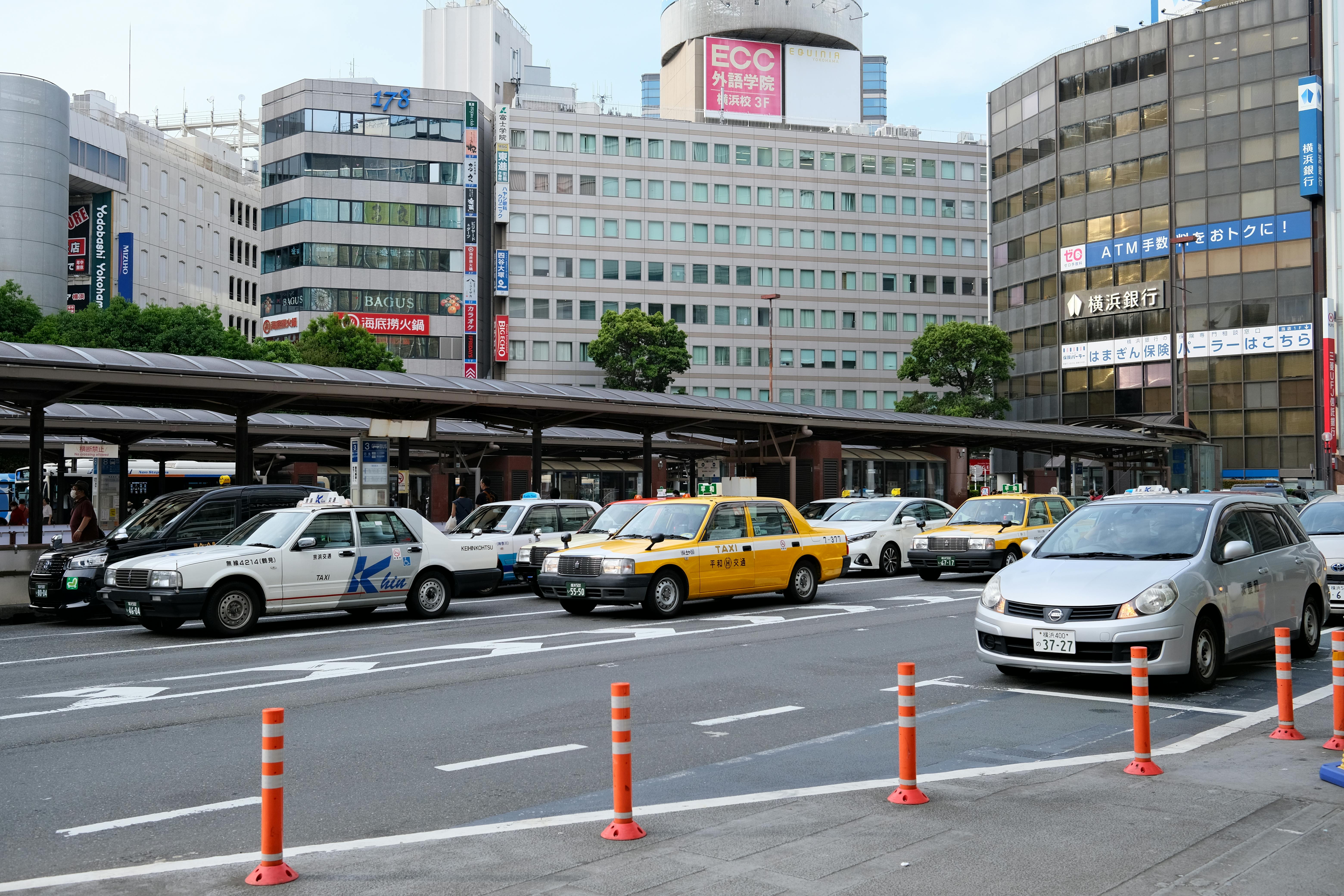
"Taxis in Japan Are Expensive" Is Old News — Small Cities Are Actually a Great Deal
When I went to Yonago last year, I ended up taking taxis a lot. And surprisingly, it never really felt like a financial hit. The same 2,000 yen would carry me across what felt like an entire neighborhood. In Fukuoka, even a tiny bit of movement seemed to send the meter climbing fast, but I didn't get that feeling at all in Yonago.
Same country — so why such a big difference? I was curious, and figured I'd look into it before my August trip. Turns out there's a real reason behind it. In 2026, base taxi fares in Tokyo and Fukuoka were actually lowered, and rural areas have always been cheaper than the big cities to begin with. There's a clear logic to why small-city taxis come out so much more affordable than the big-city ones.
A lot of Korean travelers default to "taxis are expensive, so always use public transit." But depending on where you are in Japan, the taxi can genuinely be the better-value option. Here's what I dug up.
Japan's base taxi fare varies a lot by city (as of May 2026)
The gaps between cities are bigger than you'd expect.
Tokyo 23 wards: Base fare 500 yen (up to 1 km). It used to be 730 yen, but it dropped in 2026. The pain of short trips is noticeably reduced.
Osaka: Base fare 600 yen (up to 1.2 km). Kyoto and Kobe are roughly the same.
Fukuoka: Base fare 580 yen (up to 1.3 km). Cut in February 2026. A touch cheaper than Osaka.
Regional cities (Yonago, Tottori, Matsue, etc.): Generally in the 410–500 yen range. The cheapest tier.
A lot of Koreans still picture Japanese taxis as starting around 8,000 won. That's just outdated. Even Tokyo now starts at around 5,000 won.
The real reason small cities are even cheaper
If you just compare base fares, Tokyo, Fukuoka, and rural areas aren't dramatically different. But the actual experience of riding feels completely different. The reason is Japan's combined distance-and-time fare system.
Japanese taxis don't just charge for distance — when you slow below 10 km/h or sit at a red light, the meter starts adding a time charge: 100 yen every 1 minute 30 seconds.
Big cities have more lights and more congestion, so that time charge stacks up fast. Even short trips push the meter up quickly. But in Yonago and similar rural areas, the roads are clear and there are barely any signals to wait at, so almost no time charges accumulate. The fare is essentially just the distance — which is why the same 2,000 yen gets you so much further.
That's exactly what I was feeling in Yonago. Looking back after coming home, I realized the meter had been climbing slowly the whole time. In central Fukuoka, every red light tapped on another 100 yen and I could see it happening. In Yonago, those pauses barely existed.
Details Koreans tend to miss
If you're planning to take taxis, here are some things worth knowing.
The GO app supports Korean. You put in your start and destination, see the estimated fare upfront, and you don't need to speak Japanese. Think of it as a Japanese equivalent to Kakao Taxi.
Fixed-rate taxis are worth grabbing too. Many airport-to-city routes run on flat fares. Fukuoka Airport → Hakata Station is currently a flat 1,240 yen. Safer and cheaper than running the meter.
Four-person value is actually solid. When four of you share a taxi, the per-person cost can land close to subway fare. Big groups should default to taxis.
Also, the doors are automatic — don't forget. Japanese taxis have rear doors that open on their own. Don't try to open them yourself. The driver opens them with a button when you get out too.
For a receipt, just say "ryōshūsho kudasai (領収書ください)" — that's all it takes.
Tourist taxis (a regional-only secret): This one genuinely surprised me. Some regional cities run fixed-rate tourist taxi programs specifically for foreign visitors. Yonago, where I went, has one. 3 hours for 4,000 yen, up to 4 people per taxi. That's around 40% of what locals would pay — so with four of you, it works out to 1,000 yen per person for a 3-hour customizable tour. You can pre-book at the Yonago City Tourist Information Center inside Yonago Station, or through Yonago Tourism Navigator Tourist Taxi. You build your own route, ride 3 hours, and come back. Programs like this exist in lots of small Japanese cities, not just Yonago. Worth asking at the local tourist info booth wherever you're headed.
To wrap it up
"Japanese taxis are expensive" is old news. As of 2026, Tokyo and Fukuoka cut their base fares, and small cities have been cheap to begin with. Because of the combined time-and-distance fare system, the same money carries you much further in a rural area.
Fukuoka 2,000 yen = a few blocks. Yonago 2,000 yen = across the neighborhood. That's the actual reality of Japanese taxi pricing.
Next time I head to Yonago or another small city, I'm leaning on taxis for anything that isn't a long trip. No financial stress, comfortable, and the saved time means I get to see more places. And if you're in a group, the fixed-rate tourist taxi is genuinely worth trying. So that's my take on Japanese taxi fares. I'll write up another one tomorrow if something else comes to mind.