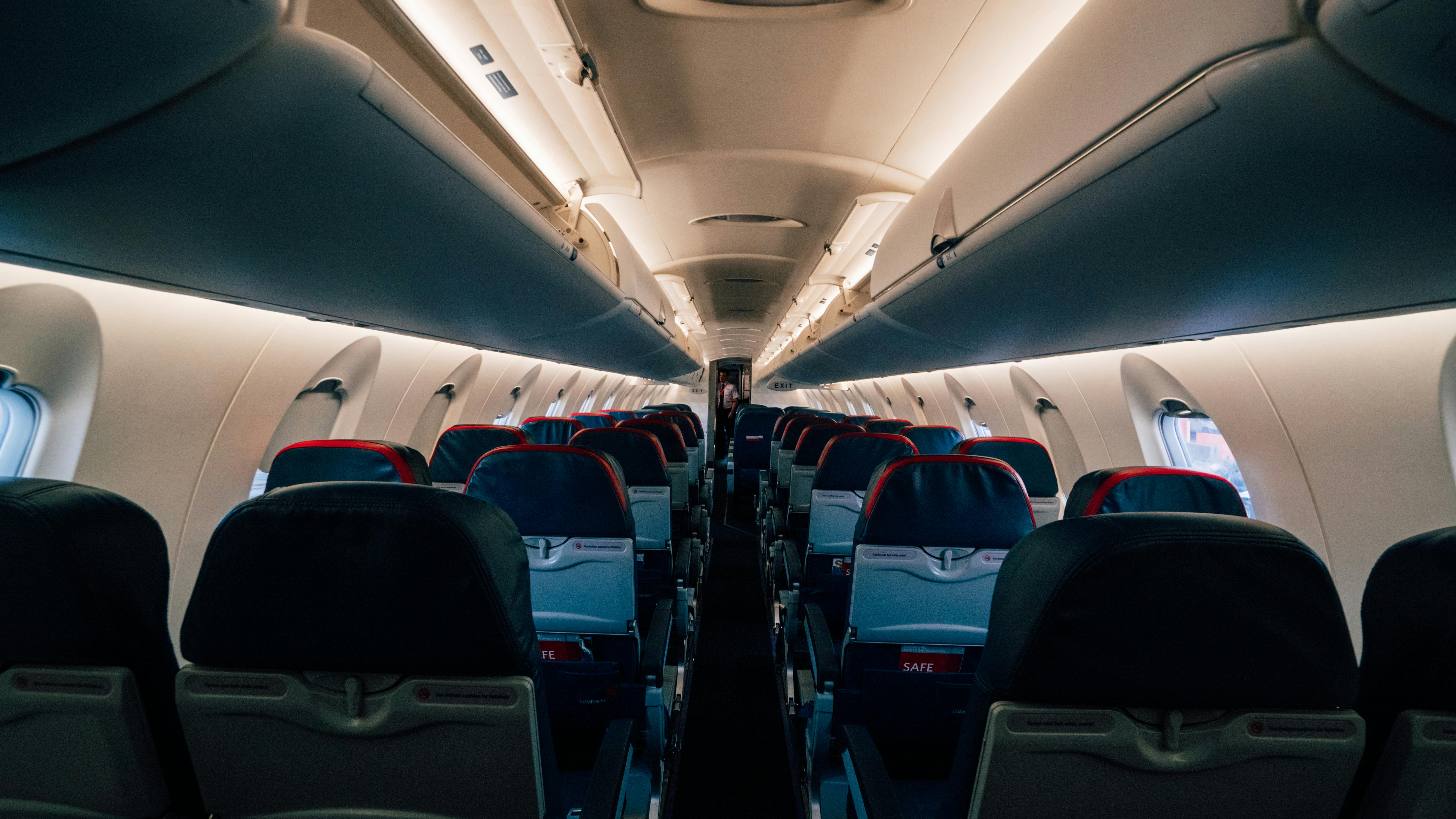
"Low-Cost Carrier Seats Are Cramped" — Actually, the Gap Between Airlines Is Huge
Most of my trips aren't long-haul, so I end up flying LCCs (low-cost carriers) a lot. Out of the ones I've flown, the airlines that stand out for me are Air Busan and Air Seoul — both had surprisingly decent legroom. I'm about 178 cm, so not exactly tall, but compared to other LCCs the difference was clear. Air Busan and Air Seoul actually felt roomy.
I'm the type that can't let a question go. Same LCC category, so why such a difference? While booking flights for my August Japan trip, I started digging into it. Turns out it wasn't just a feeling — there really are real differences. Between airlines, and even between aircraft types within the same airline. If you fly LCCs often, you've probably felt this too — let's nail down what's actually going on.
First, what does "pitch" mean?
I didn't know this either, but the front-to-back distance between seats is called "pitch." It's measured in inches. One inch is about 2.54 cm, so the gap between 28 inches and 32 inches works out to roughly 10 cm. That completely changes where your knees end up.
So instead of vaguely thinking "this airline has cramped seats," checking the actual pitch number is the smart move. At the same price, grabbing a seat with even 1–2 more inches makes a real difference.
Korean airline pitch comparison (as of 2026)
Here's what I pulled together from the data.
Korean Air / Asiana Airlines: 31–34 inches
The full-service carriers, so there's some room to stretch. They cost more, but the seats are the widest.
Air Busan / Air Seoul (A320·A321): 29–32 inches
The roomiest tier among LCCs. What I felt onboard wasn't just a hunch. A lot of online reviews say "I'd pay a bit more just to fly Air Busan or Air Seoul." Their routes are still limited, but personally I'd recommend Air Busan in a heartbeat.
Jeju Air / Jin Air / T'way (B737-800): 29–31 inches
The most common LCC seats. The upper bound is 31 inches, which is 1 inch shy of Air Busan / Air Seoul. If you're tall, that 1 inch can be felt.
Eastar Jet (B737-900ER, 2 aircraft only): 28–30 inches
The tightest range. 28 inches really can have your knees brushing the seat ahead. But this only applies to a couple of Eastar's planes — their other aircraft are average.
So the LCC label hides a real spread — between Air Busan / Air Seoul and Eastar's tightest aircraft, you're looking at up to 4 inches (about 10 cm). That was the part that genuinely surprised me.
The surprise — even the same airline varies by aircraft
This is the part that really matters. The same airline doesn't mean the same seat.
Jin Air is the classic example. Jin Air's B737-800 has a normal width, but their B777 uses a 3-4-3 layout — so individual seats are narrower. Korean Air and Asiana fly the B777 in a 3-3-3 layout, so each seat is wider. Same aircraft type, but the layout determines the width.
T'way is similar — their newer A330s feel roomier and more comfortable than the B737s. So even within T'way, your experience depends on which plane shows up. One online review I saw said, "T'way's Sapporo route uses the 330, so the seats are noticeably wider."
So when booking, don't just look at the airline name — check what aircraft is operating the route. The booking screen usually shows "B737-800" or similar in small text.
For comfortable trips, I personally weigh three things together: price, schedule, and aircraft type.
How to grab a more comfortable seat at the same price
After all the digging, four points stand out. If you fly LCCs, keep these in mind.
1. Check the aircraft first. It's there on the booking screen, just in small text. Often the aircraft matters more than the airline name.
2. For short hops to Japan and Southeast Asia, default to Air Busan or Air Seoul. Even when the price is slightly higher, the seat upgrade often makes up for it. They're the roomiest LCC tier.
3. For mid/long-haul, look for widebody aircraft. T'way's A330, Jin Air's B777 — the bigger jets. But note that Jin Air's B777 has narrower individual seats, so prioritize the pitch number.
4. Even paid emergency-exit seats are worth it. Even on LCCs, the exit row has clear space in front to stretch out. It usually adds 5,000–10,000 won, but for any flight over 3 hours, that's money well spent.
I wrote earlier about the timing of seat selection — this article pairs really well with that one. Early seat selection + aircraft check = the most comfortable flight combination.
I'll be doing both for the August Japan trip. Checking the aircraft when booking, then locking in the seat as soon as selection opens.
To wrap it up
To sum it up: within LCCs alone, there can be up to a 4-inch (about 10 cm) gap between airlines, and even the same airline varies by aircraft.
What I felt on Air Busan and Air Seoul wasn't a coincidence — they really are the roomiest LCCs out there. The reason the internet is full of "Air Busan and Air Seoul are the best LCCs" comments suddenly makes sense.
Next time you fly an LCC, don't just price-shop — take one extra look at the aircraft. The same fare can buy you a flight where your legs actually have room to breathe.